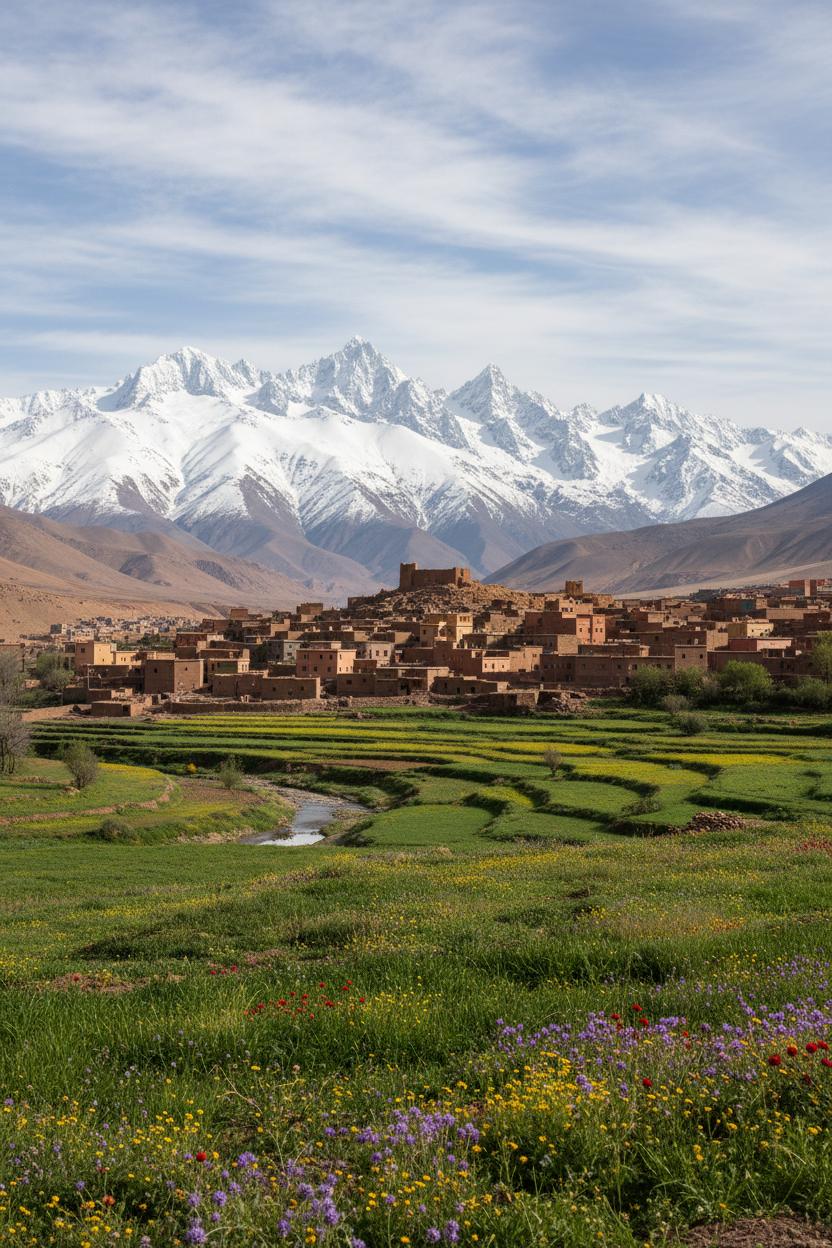
The Secrets of Berber Villages in the Atlas
In the heart of the Atlas, Berber villages preserve millennia-old traditions. Meet the inhabitants, discover their crafts, and taste their legendary hospitality.
The Secrets of Berber Villages in the Atlas
Beyond the bustle of Moroccan cities, the Atlas Mountains shelter Berber villages where time seems to flow differently. These rural communities, often perched on escarpments or nestled in verdant valleys, preserve a way of life deeply rooted in millennia-old traditions. Set off to meet these inhabitants, their crafts, and their legendary hospitality.
Who are the Berbers?
The Berbers, or Imazighen (“free men”), are the first inhabitants of Morocco and North Africa. Before the arrival of the Arabs in the 7th century, they already populated these lands. Today, they represent an important part of the Moroccan population and continue to speak their own languages: Tachelhit, Tarifit, and Tamazight.
In the Atlas, the Berbers live mainly from agriculture, livestock, and crafts. Their society is organized around the village, called “douar,” and the council of elders, which plays an essential role in community management.
Atlas villages not to be missed
Imlil
Located at 1,700 meters altitude, Imlil is the starting point for excursions to Mount Toubkal, the highest peak in North Africa (4,167 m). This village in the Ourika Valley is also an excellent place to discover Berber rural life and taste local products.
Aroumd and the villages of the Imlil Valley
Above Imlil, small adobe hamlets nestle against the mountainsides. These villages offer spectacular panoramas and an authentic glimpse of traditional Berber habitat.
Tizi n’Test and the Souss Valley
The Tizi n’Test road connects Marrakech to Taroudant through grandiose landscapes. The villages of this region, such as Tin Mal with its famous Almohad mosque, are worth the detour.
Crafts and know-how
Berber crafts are recognized throughout the world. The carpets from the Atlas Mountains are particularly sought after for their geometric patterns and natural colors. Each tribe has its own symbols, transmitted from mother to daughter.
You will also find:
- Pottery: utilitarian and decorative, often adorned with Berber motifs.
- Jewelry: fibulas, bracelets, and necklaces in chiseled silver.
- Basketry: baskets and objects braided from plant fibers.
- Berber cuisine: tagines, breads baked in traditional ovens, and mountain honeys.
Berber hospitality
Hospitality is a fundamental value of Berber culture. Inviting a stranger to share a meal, or even to stay under one’s roof, is an honor and a duty. Mint tea, symbol of this hospitality, is served upon arrival, often accompanied by bread, olive oil, and honey.
Participating in a family meal in a Berber village is one of the most enriching experiences of a trip to Morocco. Guests sit around a steaming tagine, share bread, and exchange stories in a warm atmosphere.
Hiking and nature
The Atlas is a paradise for hikers. Trails lead through terraced crop fields, cork oak forests, deep gorges, and snow-capped peaks. Multi-day treks, accompanied by muleteers and local guides, allow full immersion in these preserved landscapes.
Visiting the Berber villages of the Atlas means discovering an essential facet of Morocco. It is an invitation to slow down, exchange, and understand that the richness of a journey is also measured by the human encounters it allows.
Want to live this experience?
Happy Travel designs tailor-made trips to Morocco. Let us guide you to the finest addresses and experiences.